 how-to
How to Sell a House With Systems: 2026 Guide
Table of Contents
- What Selling a House With Systems Really Means
- Step 1: Decide Between Repairs, Credits, or As-Is
- Step 2: Know Your Real Estate Seller Disclosure Requirements
- Step 3: Get a Pre-Listing Inspection for Mechanical Systems
- Step 4: How to Transfer Smart Home Devices to New Owner
- Step 5: Market the Systems as Assets, Not Liabilities
- Your First Time Home Seller Checklist 2026
- Conclusion: Sell With Confidence and Control
- Frequently Asked Questions
Last Updated: September 7, 2026
What Selling a House With Systems Really Means
When you sell house with systems, you are navigating the physical infrastructure and digital technology modern buyers scrutinize before making an offer, from HVAC and electrical panels to smart thermostats, security cameras, and automation hubs. Treat these elements as assets that add marketability or liabilities that trigger repair concessions.
This guide breaks down the steps to prepare, disclose, and market your home's systems.
Most guides treat "as-is" sales and smart home sales as separate worlds, when every home sale involves both mechanical and technological systems requiring a unified approach.
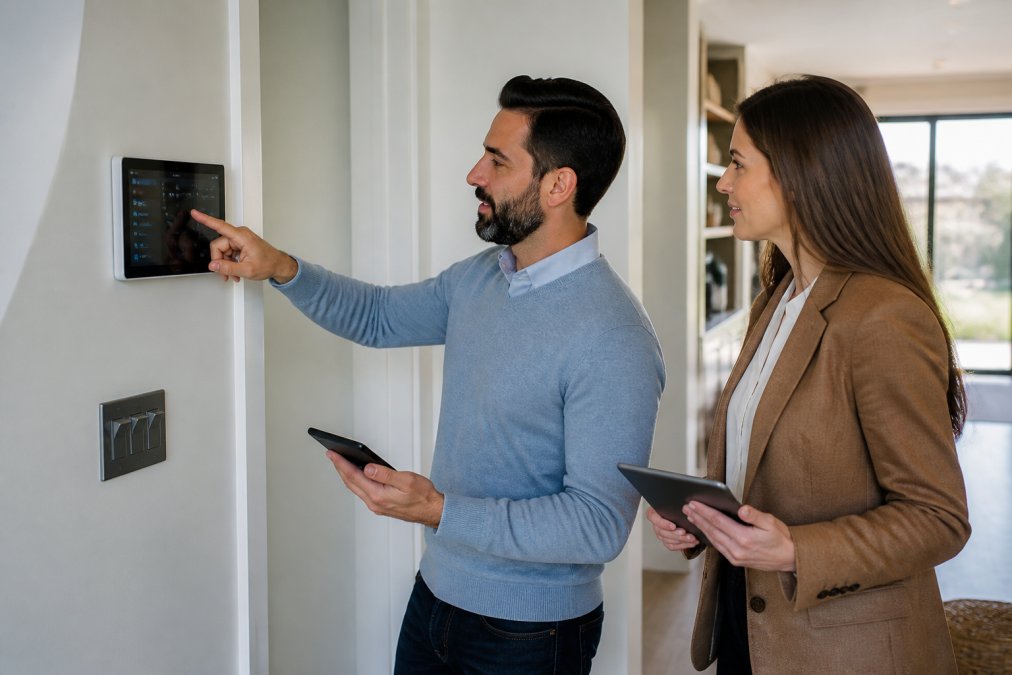
Step 1: Decide Between Repairs, Credits, or As-Is
Your first decision is whether to fix systems before listing, offer closing credits, or sell as-is. Each path changes your buyer pool, asking price, and risk exposure. The most effective approach is a cost-benefit framework comparing the ROI of a repair against the cost of a credit or price reduction.
The 3-to-1 Rule of Thumb. Buyers expect a dollar-for-dollar credit for a disclosed issue but often discount the value of a pre-listing repair. If an inspector finds a functional but aging HVAC system, a buyer will typically ask for a credit equal to full replacement cost, while a pre-listing replacement recoups only a fraction of that cost. Repair a system only if the cost is less than one-third of the value it adds to marketability.
The Lender Constraint. FHA and VA loans require minimum property standards, including functioning heating, plumbing, and electrical systems (hud.gov). An as-is sale with an inoperable HVAC eliminates FHA/VA buyers, who represent 20-30% of buyers in many markets. Ask your agent for the percentage of recent local sales using FHA/VA loans before committing to as-is.
The Credit Calculation. A closing credit must also cover the buyer's closing costs, typically 2-5% of the loan amount. If a new water heater costs $1,500, a $1,500 credit is not enough, since the buyer must finance installation, permits, and potentially expedited service. A realistic credit is 1.5 to 2 times the estimated repair cost.
The As-Is Math. As-is sales are not a single category. A dated but functional system can be priced at a 5-10% discount and still attract conventional buyers; a failed system likely requires a 15-20% discount and shifts your pool to cash investors. Get a quote from a local investor or cash buyer before listing to establish a floor for the as-is market.
A Decision Framework for Your Situation.
- Get a pre-listing inspection (see Step 3) to identify all system issues and get a repair estimate from a licensed contractor.
- Check your local market data to see what percentage of buyers use FHA/VA financing.
- Calculate the repair ROI: If the repair cost is less than 33% of the expected value increase, repair it. If not, move to the credit option.
- Calculate the credit cost: Multiply the repair estimate by 1.5 to 2 to get the realistic credit amount. Compare this to the repair cost.
- If both options are too expensive, price the home as-is at a discount that reflects the deferred maintenance, and market it specifically to investors and cash buyers.
This framework gives you a defensible, data-driven reason for your pricing and negotiation strategy.
Step 2: Know Your Real Estate Seller Disclosure Requirements
Real estate seller disclosure requirements vary by state, but every jurisdiction obligates you to reveal known material defects in your home's systems. The legal standard is what a reasonable buyer would consider material to their purchase decision, any issue affecting value, safety, or habitability.
The disclosure form is not a place for creative omission. If your smart home hub has a history of connectivity failures or your security cameras were frequently offline, document it. Buyers who discover these issues after closing can pursue legal action.
The Legal Mechanism of Non-Disclosure. Buyers who discover a system failure after closing may sue for "fraudulent concealment" or "negligent misrepresentation," seeking repair costs plus consequential damages like temporary housing, lost wages, and possibly punitive damages. The statute of limitations is typically 2 to 5 years from closing.
State-Specific Forms and Deadlines. Most states have adopted a standardized form, such as California's Real Estate Transfer Disclosure Statement (TDS) or Texas's Seller's Disclosure Notice. The form must be delivered before the purchase agreement is signed; failing to do so gives the buyer a statutory right to terminate in many states. Check your state's real estate commission website for the exact form and deadline.
The "As-Is" Fallacy. An as-is clause only waives the buyer's right to request repairs; it does not waive your obligation to disclose known defects. Courts have consistently ruled that an as-is clause does not protect a seller who actively conceals a known defect, such as a cracked heat exchanger. The only safe approach is to disclose everything you know, even when selling as-is.
The Documentation Defense. The best protection against a post-closing claim is a paper trail. If you disclose an issue and provide a repair invoice, the buyer cannot later claim you hid it. Gather maintenance records, warranties, and manuals for every major system before listing; if you lack records, call the manufacturer with the serial number for a service history.
Step 3: Get a Pre-Listing Inspection for Mechanical Systems
A pre-listing inspection is the single most effective way to control the narrative around your home's systems. Hire a licensed inspector to evaluate HVAC, electrical, plumbing, and structural components before you list.
The cost is modest compared to its use. A clean report lets you market with third-party validation; if it reveals issues, you can address them on your own timeline rather than facing urgent demands during the inspection contingency.
Attach the inspection report to your listing materials to signal transparency and reduce renegotiation after the buyer's own inspection. For system-specific concerns like an aging HVAC unit or dated electrical panel, include the inspector's efficiency ratings and remaining lifespan estimates in your disclosure packet.
Step 4: How to Transfer Smart Home Devices to New Owner
Smart home automation can be a genuine selling point, but only if the transfer is handled cleanly. Smart thermostats, locks, security cameras, and hubs require a proper handover to avoid leaving the new owner locked out or inheriting your personal data.
The transfer has three phases: factory reset every device storing personal information, including cameras with cloud recordings and locks with your codes; document the technical specifications of each device, including model numbers, installation dates, and subscriptions; and create a handover guide explaining how the new owner sets up their own accounts and connects devices to their network.
How to transfer smart home devices to new owner is a question many sellers overlook until the final walkthrough. Complete the reset process before listing, not at closing. If devices remain paired to your accounts, the new owner cannot use them and your personal data stays exposed.
| System Type | Pre-Listing Action | Transfer Method | Buyer Benefit |
|---|---|---|---|
| Smart thermostat | Save settings, reset to factory | Provide model and app setup guide | Energy savings from day one |
| Smart locks | Delete all user codes | Give new owner master code access | Immediate security control |
| Security cameras | Wipe cloud storage, log out | Transfer account ownership or reset | Privacy protection |
| Smart home hub | Remove all paired devices | Factory reset and re-pair | Full customization capability |
Step 5: Market the Systems as Assets, Not Liabilities
How you frame your home's systems in your listing strategy can mean the difference between a quick sale and a prolonged listing. Modern buyers view home automation and energy-efficient mechanical systems as desirable features, not complications.
Your marketing materials should highlight specific system benefits. An HVAC unit with strong efficiency ratings translates to lower utility bills; smart thermostats and locks appeal to buyers who value convenience and security; a well-maintained electrical panel with modern capacity signals the home can handle today's technology demands.
Professional marketing standards matter here. High-quality photos of your smart home hub, energy-efficient equipment, and organized electrical panel communicate that the systems are in good condition. If you are selling for sale by owner, your MLS listing should include these details prominently. According to the Department of Energy's guidance on smart home energy efficiency, homes with smart thermostats and efficient HVAC systems can demonstrate meaningful energy savings, which is a compelling talking point in your listing description.
The contrastive approach works well in listing copy: "This home's systems are modern, documented, and ready to use," rather than "New HVAC installed recently." The former positions systems as an integrated part of the home's value; the latter invites questions about why the old one failed.
Your First Time Home Seller Checklist 2026
If this is your first time selling a home with complex systems, this first time home seller checklist 2026 condenses everything above into actionable steps.
- Gather all maintenance records, warranties, and manuals for HVAC, electrical, plumbing, and smart home devices
- Complete the real estate seller disclosure requirements for your state, documenting all known system defects
- Schedule a pre-listing inspection focused on mechanical systems and structural components
- Decide whether to repair, offer closing credits, or sell as-is based on inspection findings and market conditions
- Factory reset all smart home devices and prepare a handover guide for the new owner
- Compile a smart home inventory listing every device, its subscription requirements, and whether it conveys
- Draft listing copy that highlights system efficiency, documentation, and ease of transfer
- Price the home realistically, accounting for any deferred maintenance you choose not to address
Working through this checklist systematically reduces stress during a sale. Rather than juggling phone calls and contractor visits chaotically, you handle each category of systems on its own timeline. This structured approach is the core philosophy behind how Lysting Direct operates.
Conclusion: Sell With Confidence and Control
To sell house with systems successfully requires balancing transparency about mechanical condition with a compelling story about technological value. Sellers who succeed document everything, disclose proactively, and present their home's infrastructure as a genuine asset.
You do not need to hand over control of the process to navigate this complexity. With the right preparation and a clear checklist, you can manage showings, buyer communication, and negotiations yourself while still presenting a professional listing that attracts serious offers. Lysting Direct provides the professional MLS placement and marketing standards you need to reach buyers, with a seller-controlled experience that eliminates constant phone calls and unnecessary meetings. As noted in the Federal Trade Commission's guidance on home buying and selling, being an informed participant in the transaction protects your interests at every stage.
Start your Lysting today and sell your home with systems on your terms, with confidence that every detail is handled.
Frequently Asked Questions
Do smart home systems add value when selling a house?
Yes, but the return depends on the buyer. Smart thermostats, smart locks, and security cameras can make a home more attractive and improve HVAC efficiency, which appeals to many buyers. However, you rarely recover the full cost of a high-end system. The bigger win is marketability: a home with modern, documented systems stands out. Focus your listing on the convenience and energy savings, not the original price tag, and be ready to explain how each device works.
How do I handle maintenance records for home systems during a sale?
Gather every service invoice, warranty certificate, and user manual for your HVAC, electrical panel, plumbing, and smart home devices. Organize them in a single digital folder or binder. Share this documentation with buyers during showings and include a summary in your listing. Clear records prove the systems were maintained, which builds buyer trust and reduces requests for repair concessions. It also protects you if a dispute arises after closing.
Should I remove my smart home devices before selling?
It depends on what you promised in the purchase agreement. If the devices are hardwired, like smart thermostats or smart locks, they typically stay with the home. Remove only items that are clearly personal property, such as smart speakers, unless the contract says otherwise. Before closing, factory reset every device that stays. This clears your personal data and gives the new owner a clean setup. Note the transfer process in your seller disclosure to avoid confusion.
What devalues a house most when selling with older systems?
An outdated HVAC system, an old electrical panel, or plumbing issues are the biggest red flags for buyers. These systems are expensive to replace, so buyers often ask for a price reduction or closing credit. An older system that still works well is less of a problem than one with deferred maintenance. A pre-listing inspection gives you the facts. You can then fix critical defects, offer a home warranty, or adjust your price to reflect the system's remaining life.