 how-to
How to Host a Successful Open House Without an Agent
Table of Contents
- Set Your Open House Timeline and Goals
- How Long Should an Open House Last?
- Market Your FSBO Open House Like a Listing Agent
- Stage the Home and Prepare for Showings
- Open House Safety Tips for Sellers
- Use an FSBO Open House Sign-In Sheet the Right Way
- Engage Buyers, Collect Feedback, and Follow Up
- Legal and Liability Basics for FSBO Sellers
- Frequently Asked Questions
Last Updated: September 10, 2026
Set Your Open House Timeline and Goals
Learning how to host a successful open house without an agent starts with a timeline, not a to-do list. This guide from Lysting Direct walks through the full sequence, from picking a date to following up with buyers.
An open house is a scheduled window when a seller invites the public to tour a home for sale, typically without an appointment. For FSBO sellers, the goal is rarely a same-day offer. It's qualified traffic, honest feedback, and a list of buyers to follow up with.
Pick the Right Day and Time Slot
Saturday and Sunday afternoons between 1 and 4 p.m. remain the most reliable window for foot traffic. Buyers plan weekend routes around multiple listings, so a mid-afternoon slot catches people already out looking.
What to Prepare Two Weeks Out
- Confirm your disclosure documents are ready to hand out
- Schedule any minor repairs and a deep clean
- Order signage, flyers, and a visitor sign-in sheet
- Draft your listing description and photo captions
- Set a follow-up system for buyer contact info
How Long Should an Open House Last?
The ideal open house length is two to three hours. Traffic clusters in the first 90 minutes, so stretching the event to five or six hours just means standing around.
Market Your FSBO Open House Like a Listing Agent
Marketing is where sellers trying to figure out how to host a successful open house without an agent lose the most ground. Start with physical visibility, then layer digital promotion on top.
Signage, Flyers, and Curb Appeal
Directional signs at major intersections within a half-mile radius do more for foot traffic than almost anything else. Use at least four signs with clear arrows and the open house hours. Flyers should highlight three property features, not twenty, and curb appeal matters: mowed lawn, clear walkway, freshly wiped front door.
Digital Promotion and Virtual Open House Options
Post your event to local Facebook groups, neighborhood apps, and your own social channels. A virtual open house option, such as a live walkthrough video or a scheduled video call for out-of-town buyers, extends your reach without extra foot traffic. According to National Association of Realtors guidance on virtual tours, buyers increasingly rely on digital previews before touring in person.
Stage the Home and Prepare for Showings
Property staging is the difference between a tour and a sale. You don't need to rent furniture, just remove clutter, depersonalize, and let natural lighting do the heavy lifting.
Focus on these areas, in order:
- Entryway - clear shoes, coats, and mail
- Kitchen - empty counters, hide small appliances
- Living room - pull furniture off walls, add one plant
- Bedrooms - neutral bedding, no personal photos
- Bathrooms - fresh towels, no products on display
Open every blind and curtain, and turn on lamps in dark corners. A floor plan near the entrance helps buyers remember the layout later.
Open House Safety Tips for Sellers
Open house safety tips for sellers come down to three principles: never be alone with a stranger in an isolated space, keep valuables out of reach, and know who is in your home at all times. Without an agent, you are also legally responsible for what happens on the property during the event.
Before the Event: Reduce the Attack Surface
- Store jewelry, prescriptions, small electronics, and financial documents in a locked closet or off-site. A safe that stays in the home is a target, not a solution.
- Move anything with a serial number into a room you can lock and keep the key on your person.
- Remove anything a visitor could use as a weapon or tool, box cutters, ladders, loose tools in the garage.
- Tell a neighbor the exact start and end time, and text them when the last visitor leaves.
- Keep your phone charged and your car keys on you, not in a bowl by the door.
- Park your own car down the street so visitors cannot identify which vehicle is yours.
During the Event: Control the Flow
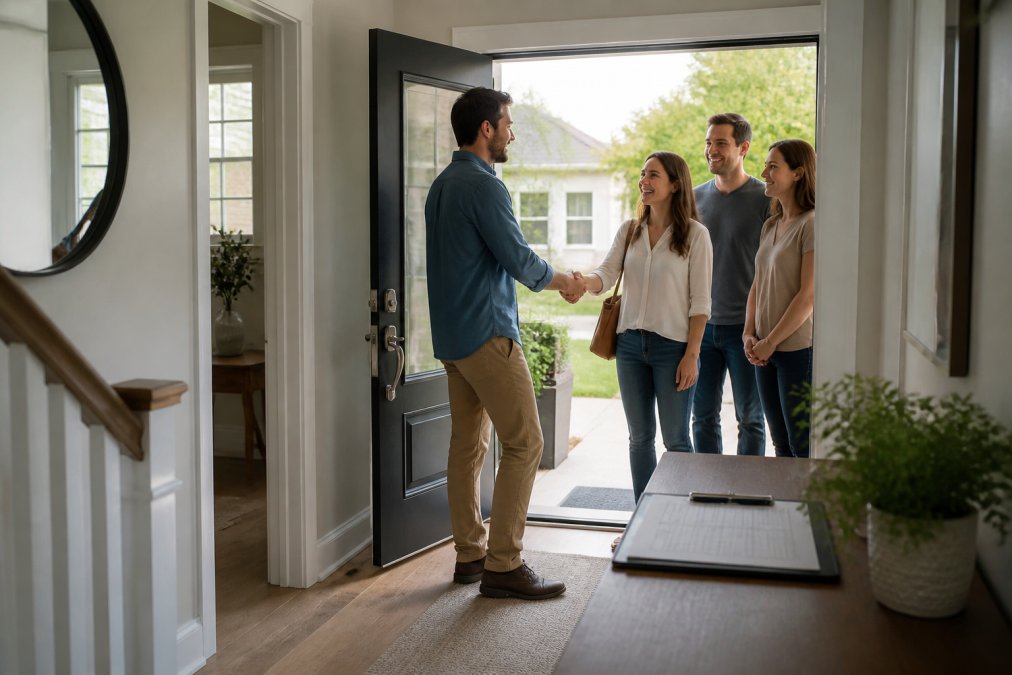
- Ask every visitor to sign in before touring, name, phone, and email. A visitor who refuses is a visitor you do not admit.
- Walk behind groups, not ahead of them, so you can see hands and pockets and stay between the visitor and the exit.
- Never let a visitor enter a locked room, the garage, or a basement alone. "That room is locked for the event" is a complete sentence.
- Keep one hand free, do not carry a tray of cookies or a stack of flyers that occupies both hands.
- If one of two visitors drifts toward a bedroom while the other talks to you, walk toward the drifting visitor and ask a question.
- Trust the exit. If someone makes you uncomfortable, "I need to wrap up now" is enough.
After the Event: Close the Loop
- Walk through every room, closet, and cabinet before you lock up. Theft during open houses is usually small and quiet, a prescription bottle, a watch, cash from a drawer.
- Photograph the sign-in sheet before you leave so you have a copy if the original is lost.
- If something is missing, file a police report the same day. Your homeowner's policy may require prompt reporting, and the sign-in sheet is the evidence that makes the report useful.
- Check that all windows and exterior doors are locked before you drive away.
The Liability Layer Most FSBO Guides Ignore
When you host without an agent, you are responsible for the condition of the property during the event. A loose stair railing, an unmarked wet floor, or an unsecured dog can become your problem if a visitor is injured. Practical steps:
- Fix or clearly mark known hazards before the event, loose handrails, uneven walkway pavers, a slippery entry mat.
- Secure pets. Even a friendly dog can knock down a visitor, and a bite is a serious liability exposure.
- Check whether your homeowner's policy covers business or commercial activity on the property. Many standard policies exclude claims arising from business use of the home, and an open house can be read that way. A call to your insurer before the first event is cheaper than a claim after it.
- Do not make verbal promises about repairs, warranties, or closing timelines. Verbal statements made during a showing can be treated as representations, and you have no agent's errors-and-omissions coverage behind you.
Use an FSBO Open House Sign-In Sheet the Right Way
An FSBO open house sign-in sheet is more than a formality, it's your lead list, safety record, and follow-up database in one document. A useful sheet captures name, email, phone, buyer status (pre-approved, just looking, working with an agent), and how they heard about the open house.
Explain the purpose out loud: "I'll use this to send you updates if anything changes." Transparency increases compliance. Handle the data responsibly. Don't leave the sheet visible to other visitors, and store it securely after the event. The Federal Trade Commission's data security guidance outlines basic expectations for protecting personal information you collect.
| Field | Why It Matters | Follow-Up Use |
|---|---|---|
| Name | Personalizes outreach | Email greeting |
| Primary contact channel | Listing updates | |
| Phone | Faster response | Time-sensitive alerts |
| Buyer status | Prioritizes leads | Focus pre-approved buyers |
| Source | Tracks marketing ROI | Repeat what works |
Paper vs. Digital Capture: The Trade-Off
A clipboard is free and works when the Wi-Fi does not, but it creates a single physical document that can be lost, photographed by the next visitor, or left on a kitchen counter. Digital capture, a tablet form, a QR code sign-in page, or an open house app, solves the storage problem and lets you export leads to a spreadsheet the same afternoon.
The trade-off is friction: some visitors, especially older buyers, hesitate to type personal information into an unfamiliar device. A practical hybrid is a QR code on a small card at the entry with a one-line explanation, plus a paper sheet as backup. You get the digital export for most leads without losing the visitor who won't touch a tablet.
What to Put in the Consent Line
If you collect contact information, you are collecting personal data, and how you use it matters. A short consent line above the signature field, "By signing in, you agree to be contacted about this property and future listings", sets expectations and gives you a defensible basis for follow-up emails. Without it, a follow-up text to a number a visitor gave for "safety purposes only" can read as unwanted contact.
Two practical rules:
- Do not add visitors to a general mailing list or a third-party marketing tool unless your consent line covers it. "Updates about this property" is not the same as "my monthly newsletter."
- Do not share the list with other sellers, investors, or lead-generation services. Selling or sharing a sign-in list without consent is the fastest way to turn a routine open house into a complaint.
Storing and Disposing of the Data
- Photograph or scan the paper sheet at the end of the event and store the image in a password-protected folder, not your camera roll.
- Keep the original in a locked drawer until you have entered the leads into your follow-up system, then shred it.
- Delete leads that never responded after 60 to 90 days. You do not need to keep data you are not using.
- If you use a digital form tool, check whether it stores data on your server or the vendor's. Read the vendor's privacy terms before the event, not after.
Engage Buyers, Collect Feedback, and Follow Up
Buyer engagement during the tour is about questions, not pitches. Ask visitors what they're looking for and what brought them to the neighborhood. Their answers tell you which property features to emphasize in your follow-up.
Collect feedback honestly. If three visitors mention the same concern, such as a small kitchen or busy street, that's a signal, not a coincidence. You may not be able to fix it, but you can adjust your pricing or listing copy to address it.
Follow up within 24 hours. A short, personal email works better than a mass blast. Reference something specific they said during the tour. This is where most FSBO sellers drop the ball: they collect names and never use them.
Legal and Liability Basics for FSBO Sellers
Legal and liability considerations trip up more FSBO sellers than pricing does. You are responsible for accurate disclosures, fair housing compliance, and safe conditions on your property during the event.
Federal law requires sellers to disclose known material defects. HUD's Fair Housing Act overview explains the protected classes you cannot discriminate against when selecting buyers. Your state may add disclosure requirements beyond federal rules, so verify the specifics with a real estate attorney or your state's licensing board before your first showing.
For sellers who want professional MLS exposure without a full-service agent, Lysting Direct provides a seller-controlled listing process with guided onboarding and clear communication at every stage. Sellers maintain control of the sale while using a licensed real estate broker for MLS listing and syndication.
Frequently Asked Questions
Can a homeowner host their own open house without a real estate agent?
Yes. A homeowner can host an open house without an agent. You handle the setup, greet visitors, and collect sign-ins yourself. The main differences from an agent-hosted event are that you answer questions directly and manage follow-up on your own. Prepare a simple script, keep your disclosure documents on hand, and treat every visitor as a potential buyer rather than just a browser.
How long should an open house last for a for sale by owner property?
Most FSBO open houses run two to three hours on a Saturday or Sunday afternoon. That window catches casual weekend traffic while keeping the event manageable for one person. If your market is slower, a weekday evening slot of 90 minutes can work. The key is consistency: pick a time, promote it clearly, and be ready to stay the full window even if traffic is light early on.
What should an FSBO open house sign-in sheet include?
A practical sign-in sheet collects name, phone number, email, whether the visitor is working with an agent, and how they heard about the open house. Add a checkbox for permission to follow up. Under data privacy rules in many states, you should tell visitors how their information will be used and store the sheet securely. Do not leave completed sheets visible to other visitors.
What are the most common mistakes to avoid at open houses?
The biggest mistakes are pricing too high for the neighborhood, leaving valuables or prescription medications accessible, failing to follow up with visitors within 48 hours, and not having disclosure documents ready. Other frequent errors include poor signage that makes the home hard to find and skipping a sign-in sheet entirely, which leaves you with no way to contact interested buyers after the event.
Hosting an open house without an agent is manageable when you treat it as a system: plan two weeks out, market locally, stage deliberately, protect yourself, and follow up fast. The sellers who struggle are usually the ones who skip the timeline or the follow-up. Lysting Direct gives FSBO sellers the MLS exposure and professional marketing standards of a traditional listing while keeping the process in your hands. Start your Lysting and run your next open house with a system behind you.