 how-to
Avoiding Real Estate Agent Phone Calls: A 2026 Guide
Table of Contents
- Why Do Real Estate Agents Keep Calling?
- How to Stop Realtor Spam Calls with the Do Not Call Registry
- Your Legal Rights Against Unsolicited Calls
- Using a Burner Number for Real Estate Listings
- Call Screening and Blocking Tools That Work
- Real Estate Agent Solicitation Scripts and How to Respond
- Conclusion: Take Control of Your Phone and Your Sale
- Frequently Asked Questions
Last Updated: September 6, 2026
The constant ringing from real estate agents can feel invasive, especially when you are trying to enjoy a quiet evening at home. Avoiding real estate agent phone calls requires a clear strategy that combines legal protection, practical screening, and knowing how to respond. This guide from Lysting Direct explains the most effective methods to stop unsolicited real estate agent phone calls while keeping your home sale on your terms.
Most homeowners do not realize that simply answering the phone and asking to be removed from a list often triggers more calls from different agents. The key is understanding that these calls come from lead generation systems, data brokers, and expired listing databases. Understanding how to remove your number, block future solicitations, and handle the calls that slip through is crucial.
Why Do Real Estate Agents Keep Calling?
Real estate agents call because your phone number is likely on a list of potential sellers. When you fill out a home valuation form, visit a real estate website, or your mortgage information becomes public record, your contact details often end up in databases that agents purchase from data brokers. These lists are sold as "leads" and are aggressively targeted by agents looking for new listings.
The frequency increases when your property shows signs of being for sale. Agents monitor public records for homeowners who might be motivated to sell, including those with significant equity or recent life changes. The calls are a numbers game: agents know that a small percentage of cold calls result in a listing, so they keep dialing. Understanding this dynamic is the first step in stopping the interruptions.
How to Stop Realtor Spam Calls with the Do Not Call Registry
Registering your number with the National Do Not Call Registry is the most effective first step against realtor spam calls. This free service, managed by the Federal Trade Commission, allows you to opt out of most telemarketing calls, including those from real estate agents. You can register your home and mobile numbers online at the official Federal Trade Commission Do Not Call Registry website.
Registration is not an instant fix. Your number becomes active on the registry within 31 days, and telemarketers have up to 31 days to remove you from their calling lists (the FTC). After that period, most legitimate agents will stop calling. However, the registry does not block calls from political organizations, charities, or companies you have recently done business with. If you have inquired about a property or spoken with an agent recently, expect those calls to continue for a short time.
Your Legal Rights Against Unsolicited Calls
When you are on the Do Not Call Registry and an agent calls anyway, they are violating the Telephone Consumer Protection Act (TCPA) regulations. This federal law restricts telemarketing calls and the use of automated dialing systems, and it gives you the right to take action. You can file a complaint with the FTC or the FCC, and repeat offenders can face substantial fines.
Beyond the federal level, many states have their own telemarketing laws that offer additional consumer protection. These laws often require agents to maintain internal do-not-call lists and prohibit calls before 8 a.m. or after 9 p.m. If a call violates these rules, document the time, date, and the agent's name and brokerage. This information is useful if you decide to file a formal complaint. For most homeowners, simply knowing your rights and stating them firmly is enough to stop future calls.
Using a Burner Number for Real Estate Listings
Using a burner number for real estate listings is a proactive strategy that keeps your personal line private. When you list your home for sale by owner, you must publish a contact number. Instead of using your primary cell phone, get a separate, low-cost number through a service like Google Voice or a prepaid SIM card. This number is what goes on your "For Sale" sign and online listings.
The advantage is clear: once the property sells, you can abandon that number and stop the calls instantly. You control when you check voicemail, and you avoid the stress of your personal phone buzzing during dinner. This approach also lets you track which marketing channels generate genuine buyer interest versus which ones attract agent solicitations. It is a small investment of time that protects your privacy throughout the selling process.
Call Screening and Blocking Tools That Work
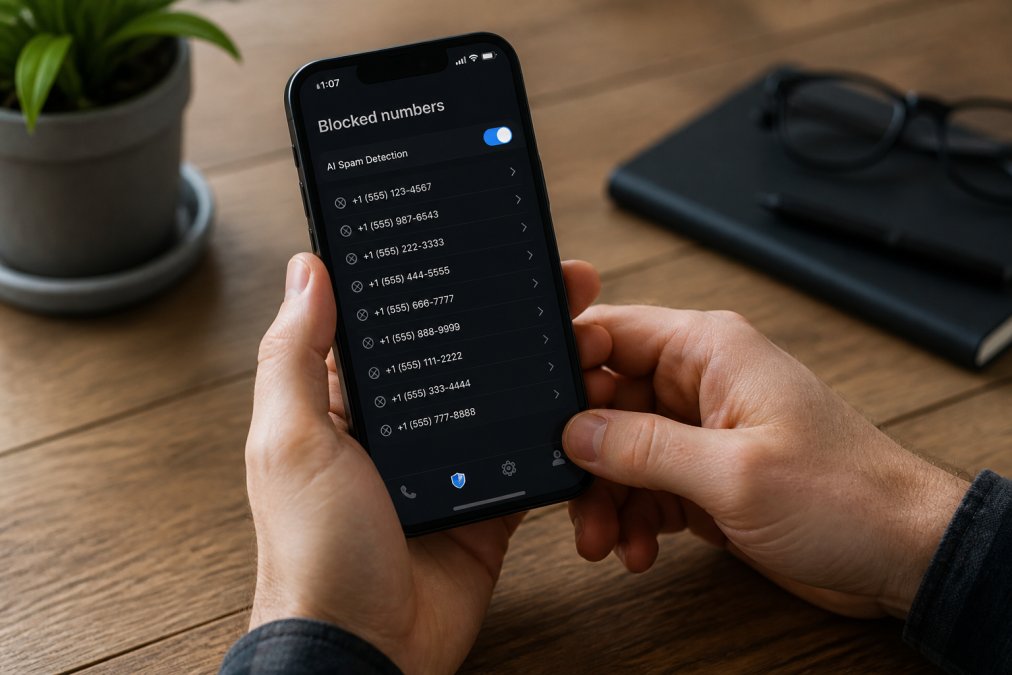
Basic block buttons only stop one number at a time. Real estate agents often call from a rotating list of numbers, so you need tools that stop the pattern, not just the caller. The most effective approach combines your phone's native features with carrier-level services and AI-driven apps that identify and block spam before it rings.
Start with Your Phone's Built-In Defenses
Both iOS and Android have moved beyond simple block lists. On iOS, the 'Silence Unknown Callers' feature sends calls from numbers not in your contacts straight to voicemail. On Android, 'Caller ID & Spam Protection' (often enabled by default on Google Pixel and Samsung devices) uses a database of known spam numbers to flag or block suspicious calls. These features are free and require no setup, but they are not perfect, they can miss new numbers that agents acquire from data brokers.
Carrier-Level Blocking: The Next Layer
Major carriers now offer network-level spam protection that filters calls before they reach your device. For example, AT&T's ActiveArmor and T-Mobile's Scam Shield are free services that automatically detect and block likely spam calls based on network-wide call patterns. Verizon offers a similar service called Call Filter. These tools are effective because they analyze call metadata across millions of numbers, catching patterns that your phone alone cannot see. You typically activate them through your carrier's app or website, and they require no hardware changes.
AI-Driven Apps for Persistent Callers
For the most aggressive solicitations, third-party apps like RoboKiller and Truecaller use predictive algorithms that go beyond static block lists. These apps analyze call behavior in real time, frequency, duration, and number reputation, to identify new spam numbers the moment they start calling. Some apps, like RoboKiller, even answer the call with a pre-recorded 'anti-robocall' script that wastes the agent's time, making your number less valuable to their lead-generation system. These apps typically cost between $3 and $5 per month, but they offer a level of protection that native features and carrier tools do not.
The Trade-Off: Over-Blocking Can Cost You
A common mistake is enabling every blocking feature at maximum strength. This can inadvertently silence legitimate calls from potential buyers, your child's school, or a doctor's office. If you are actively selling your home, you need to balance privacy with accessibility. A practical approach is to use carrier-level blocking for obvious spam, keep your phone's native features on, and reserve AI-driven apps for the period when you are actively listing your property. You can always adjust the settings after your home sells.
Real Estate Agent Solicitation Scripts and How to Respond
The constant interruption is not just an inconvenience, it is a form of digital fatigue. Each call forces you to shift your attention, check your phone, and manage an emotional response to an unwanted intrusion. This is why a prepared response is not about being rude; it is about protecting your mental space and your time. The goal is to end the interaction quickly, firmly, and without leaving any opening for a follow-up.
The Psychology of the Caller
Understanding why agents call helps you respond effectively. Agents are trained to overcome objections and are often measured on call volume, not just conversions. They are taught that 'no' is a starting point, not an ending. This means a polite but vague response like 'I'm not interested right now' is interpreted as a future opportunity. The agent hears 'maybe later' and adds you to a follow-up list. Your script must communicate finality, not just disinterest.
The Script That Works
When a call slips through, use a response that leaves no ambiguity. A simple, effective script is: "Please add my number to your do-not-call list. I am not interested in listing my home with an agent, and I do not want to be contacted again." This statement does three things: it invokes your legal right under the TCPA, it states your position clearly, and it requests a specific action (removal from their list).
If the agent persists, escalate without engaging: "I have asked you to stop. If you call again, I will file a complaint with the FTC and your state's real estate commission. Goodbye." Then hang up. Do not wait for a response. Do not answer follow-up questions. The moment you engage in conversation, even to argue, you signal that your time is available.
What Not to Say
Avoid phrases that create openings. Do not say 'I'm not selling yet,' 'Maybe next year,' or 'I'm just looking at my options.' These statements are gold to a lead-generation system. They mark you as a 'future lead' and guarantee follow-up calls. Also avoid explaining your reasons for selling or your timeline. Every piece of information you share is logged and used to tailor the next call.
The Emotional Toll and Your Right to Disconnect
The frustration you feel is valid. Unsolicited calls can increase stress and reduce your sense of control over your own environment. This is why your response should be automatic, not emotional. An emotional response, anger, frustration, or even excessive politeness, invites further conversation. A scripted, neutral, and firm response protects your emotional energy and signals that you are not a viable lead.
When to Report, Not Just Respond
If you are on the National Do Not Call Registry and an agent calls more than once after you have asked to be removed, stop responding and start documenting. Note the time, date, the agent's name, and their brokerage. File a complaint with the FTC at donotcall.gov. Repeat violations can result in fines of up to $43,792 per call for the brokerage. Most agents know this risk, which is why a firm reference to your rights is often the most effective call-ender.
Conclusion: Take Control of Your Phone and Your Sale
Constant calls from agents can be a symptom of a process that may not always prioritize your convenience. The traditional model can require extensive phone tag and meetings that consume your time. When you decide to sell, you deserve a process that respects your time and your privacy.
Lysting Direct offers a simplified, seller-controlled real estate experience that eliminates the need for constant phone calls, emails, and unnecessary meetings. By integrating clear systems and guided onboarding, you maintain control while knowing exactly what to expect at every stage. You handle showings and negotiations on your schedule, without the interruption of agent solicitation. Start your Lysting and sell your home on your terms, with professional marketing standards and the freedom to manage the sale your way.
Frequently Asked Questions
Does the National Do Not Call Registry apply to real estate solicitations?
Yes, it applies to real estate agents. Once your number is on the registry for 31 days, agents are prohibited from calling you unless you have an established business relationship or they have your written permission. If they call anyway, you can file a complaint with the FTC. Note that agents who have previously done business with you may still call, so you must explicitly ask them to stop.
Why do I keep getting calls from real estate agents when I list as FSBO?
Your FSBO listing is public information, and agents see it as a lead. Many are looking to secure a listing agreement or buyer representation. They may call, text, or email to offer their services. This is why using a burner number or a Google Voice number on your listing is a smart strategy. It keeps your personal line private and makes it easier to screen or silence solicitation calls.
What is the best way to screen real estate inquiries without answering every phone call?
Let unknown calls go to voicemail. A legitimate buyer will leave a detailed message. Real estate agents soliciting business will often hang up or leave a generic pitch. If you use a dedicated number for your listing, you can check messages in batches. This approach filters out spam and lets you call back only the serious prospects, reducing interruptions while keeping your sale on track.
Does pressing 9 stop telemarketers?
Pressing a number to be removed from a list can sometimes work, but it can also confirm your number is active and lead to more calls. The most effective method is to not engage and simply hang up. For persistent callers, block the number directly on your phone or use your carrier's spam-blocking features. Registering your number on the National Do Not Call Registry is the first step for long-term relief.
This content is for informational purposes only and does not constitute legal advice. For questions about telemarketing laws or the Do Not Call Registry, consult the official resources of the Federal Trade Commission and the Federal Communications Commission.